miércoles, 9 de febrero de 2011

A Recipe for Medical Schools to Produce Primary Care Physicians


Estimados colegas este artículo publicado en el New England Journal of Medicine , habla sobre la necesidad de más médicos de atención primaria.
Saludos 
Dr. Carlos Erazo

The implementation of health care reform in the United States will add to the growing demand for primary care physicians. Only about a third of active physicians in this country currently practice primary care medicine, and the proportion would probably shrink if the only source of new primary care physicians were graduates of U.S. allopathic medical schools, since only 16 to 18% of those graduates are likely to go into primary care.1
Our country would be better served if an adequate supply of primary care services were available. Health care systems that rely too much on specialty care services are less efficient and more expensive than their counterparts that are focused on primary care.2 Preventive care, care coordination for the chronically ill, and continuity of care, which are the hallmarks of primary care, can all improve the overall quality of services that patients receive.
It seems clear to me that we need to find a way to increase the number of graduates of U.S. allopathic medical schools who go into primary care. The alternatives are to allow the status quo to continue (with larger proportions of primary care physicians being international medical graduates and graduates of osteopathic medical schools), to allow advanced practice nurses and physician assistants to assume a greater role in providing primary care, or to allow primary care to dwindle and move toward a system in which patients are cared for by multiple specialists. As someone who spent nearly a quarter of a century as an associate dean for medical education, I am loath to give up on the possibility that allopathic medical schools can do a better job of getting their graduates to go into primary care.
The recent launching of new allopathic medical schools provides an especially good opportunity to design the medical education experience in a way that fosters student selection of primary care careers. A majority of the new schools state that their mission is to produce primary care physicians or, more broadly, to meet the workforce needs of their region. Although the steps I outline below are intended as a recipe for new medical schools with just such a mission to follow, existing medical schools could also reengineer themselves to achieve the same goal.
New medical schools must recognize the current factors that discourage medical students from pursuing primary care careers and then devise ways to overcome these barriers. Most U.S. medical students gain a discouraging view of practice in primary care as they observe harried primary care physicians who have too much to do and too little time in which to do it. They hear disparaging remarks about primary care from residents and faculty members, who extol narrowly focused expertise. Students see the same values expressed in the wider society, which compensates subspecialists at far higher levels than primary care physicians. Students are intimidated by the breadth of knowledge required for primary care — but simultaneously concerned that primary care might be boring. And schools have difficulty finding high-quality ambulatory care teaching sites where students can learn the art and science of primary care.
Medical schools that are truly committed to training graduates for primary care must recognize that every decision they make should advance the mission of the school. Institutional decisions create a meta-curriculum that frames the other components of a medical school. Certainly, articulating a mission is important, but unless other institutional decisions clearly bolster that mission, the rhetoric will appear empty, if not disingenuous. The paramount decision, in my view, will be naming the leadership of the new medical school: the founding dean must be a primary care physician. Next, the dean must make it clear that the school's mission will not be held hostage to rankings inU.S. News & World Report. Taking such a stance will require courage and commitment and must be explicitly supported by the university president and the governing board of the medical school and its parent university.
The first test of this commitment will come in the way in which admissions are handled. The little evidence that is available on factors predicting career choice indicates that students who express a desire to serve underserved populations, who demonstrate altruism, and who are committed to social responsibility are more likely to go into primary care.3 I believe that admissions criteria need to be broadened beyond scores on the Medical College Admission Test (MCAT) to include these personal attributes. The school should adopt an “MCAT-blind” admissions policy, dictating that students whose MCAT scores are at or above a predefined minimum that predicts a likelihood of success in medical school should then be considered further for admission without the reporting of their MCAT scores to the admissions committee.
I would further advise that the curriculum be based on a patient-centered learning approach, in which the basic sciences are studied through case presentations of richly described virtual patients who are “seen” repeatedly by students over the course of the curriculum, just as a real panel of patients would be. The traditional head-to-toe cadaver dissection should be abandoned in favor of the examination of prosections that illustrate the specific anatomical problems of the virtual patients. Learning should be integrated into focused explorations of each patient's problems.
More generally, the curriculum should be built around the competencies expected of a primary care physician. Achievement of those competencies should be measured with performance-based methods of assessment that authentically reflect the tasks expected of primary care physicians. And the assessment tools used should place value on the ability of students to be comfortable with uncertainty and to use clinical resources wisely and prudently.
Teaching medical students to function effectively as part of an interprofessional team must be deliberately planned as part of the curriculum. Medical students must acquire knowledge about the healing traditions of other disciplines, show respect for other health care professionals, and appreciate the valuable services those disciplines provide to patient care. Medical students must acquire skills related to leading, following, decision making, communicating, and allocating tasks as members of a team.
Students should be offered the opportunity to do their clinical training in community-based settings, perhaps even in their hometowns if possible, where they should be assigned to a primary care practice. After an initial block of time spent exclusively in that practice, students should use the health care resources in their assigned community to acquire a broader set of clinical experiences in other medical specialties.
In addition to exploring methods of traditional biomedical research, new medical schools should emphasize sociomedical research, which examines the translation of scientific knowledge into clinical practice. In primary care, such research can address issues of patients' adherence to medications, smoking cessation, and other preventive practices. Research opportunities in these areas would be ideal for medical students who aspire to careers in primary care.
In a sense, the relationship between a faculty member and a medical student should mirror the doctor–patient relationship: it should be one of mutual respect and collaborative decision making. In addition, medical schools should embrace rituals and traditions that support primary care, such as National Primary Care Week. School policies should encourage cocurricular activities, such as a student-run free clinic, and grading polices should promote collaboration rather than competition.
Health care reform promises changes in the system of care that will promote some form of capitated payment and narrow the income disparity between primary care physicians and specialists. The anticipated result is primary care practice that will appeal to students as being both professionally and personally rewarding.
Even if a new medical school follows the recipe closely, many students will still choose to enter other specialties, but I believe that exposure to this curriculum will make them more “primary care responsive” clinicians. Students should be guided and supported in making career decisions that are well suited to their temperaments and talents. Even so, I believe that schools that follow these principles should expect to see a majority of their graduates entering primary care practice. And whether we succeed or not, we must try — the quality of U.S. health care hangs in the balance.
Disclosure forms provided by the author are available with the full text of this article at NEJM.org.

SOURCE INFORMATION

From the Warren Alpert Medical School, Brown University, Providence, RI.

Transforming Graduate Medical Education to Improve Health Care Value


Estimados colegas , este artículo trata sobre el cambio en la visión de la educación médica , enfocada para el cuidado de salud.


Espero que les guste.


Saludos 


Dr. Carlos Erazo


http://healthpolicyandreform.nejm.org/?p=13728&query=TOC

NEJM | February 9, 2011 | Topics: Health Care Delivery
Glenn Hackbarth, J.D., and Cristina Boccuti, M.A., M.P.P.
U.S. health care is too expensive, and its quality too inconsistent. To ensure that health care will be affordable for future generations and appropriate for our burgeoning geriatric population, its delivery and organization must change. Physicians should be in the vanguard of this change, and transforming medical education will be instrumental in preparing tomorrow’s physicians to lead the way.
Swensen et al. have stated that U.S. physicians must shift from viewing themselves as “nonintegrated, dedicated artisans who eschew standardization” to become leaders of a system that values “wise standardization, meaningful measurement, and respectful reporting.”1 To manage this transition, physicians will need the requisite new perspectives and skills for evidence-based practice, effective use of information technology, quality measurement and improvement, cost awareness, care coordination, leadership of interdisciplinary teams, and shared decision making. Mastering the necessary skills and shifting one’s perspective on what it means to be a good doctor will be a career-long endeavor that should begin during medical school and residency.
Because of the important role Medicare plays in financing residency training through payment to teaching hospitals for graduate medical education (GME), the Medicare Payment Advisory Commission (MedPAC) recently conducted a review of the U.S. GME system. This system is, in many ways, the envy of the world, annually producing thousands of new clinicians who are well trained in applying cutting-edge technology and techniques to aid severely ill or injured patients. Teaching hospitals also serve as linchpins of their local health care systems and contribute to stunning advances in medical science. Judged through this traditional frame of reference, the GME system is an extraordinary success. However, that success and frame of reference are no longer adequate. The GME system must join others in transforming the U.S. health care system into an economically sustainable enterprise that provides appropriate care for all Americans. Working with academic medicine and specialty boards, the Accreditation Council for Graduate Medical Education has taken important steps in reorienting its residency-program accreditation standards to support needed change. We applaud that progress, but it has been slower than MedPAC and some members of the GME community would like.
Medicare invested $9.5 billion in GME in 2009. It is the single largest payer for GME, but it establishes minimal accountability for achieving education and training goals. MedPAC has therefore recommended that Congress authorize Medicare to use this financial leverage to catalyze more rapid GME reform by linking about one third of its GME dollars to programs’ performance on newly developed measures. In essence, MedPAC recommended that Congress stimulate GME reform by bringing new voices and new forces to the table.
To establish new performance measures that focus on the skills needed to improve our health care delivery system, MedPAC recommends that the secretary of health and human services create an expert advisory body. This group would include leaders from accrediting and certifying organizations and GME faculties, along with representatives of specialty boards, high-performing health care systems, public and private purchasers, and consumer and patient organizations. This advisory body should be given 3 years to develop new standards and a method for linking those standards to new payment incentives. The secretary’s role would be not to develop the specific standards but rather to push the experts to be ambitious in addressing the problem.
Funding for the incentive payments should come from the $9.5 billion that Medicare contributes to GME. Because Medicare’s current payments toward the indirect costs of GME (e.g., higher costs incurred for testing or longer hospital stays that are attributable to an institution’s engagement in GME) exceed the estimated actual costs by about $3.5 billion,2 we recommend that this portion be reallocated to fund the incentive payments. All, some, or none of this amount could be paid out, depending on whether the advisory body successfully develops standards for increased accountability and on the extent to which GME programs meet those standards. MedPAC’s goal is not to reduce Medicare outlays for GME: we would like to see programs receiving all $3.5 billion, because that would mean that new standards are in place and being met.
Recognizing the need for delivery-system reform and academic medicine’s potential role in leading it, the Association of American Medical Colleges (AAMC) has proposed the creation of health innovation zones (HIZs). Academic medical centers would be the hubs of these zones, which would include other health care providers. If payment methods were changed within these zones (for example, through the institution of population-based capitated payments) and laws and regulations that are perceived as inhibiting collaboration and change were repealed or relaxed, the AAMC believes that HIZs could deliver more efficient care and become exemplars for the rest of the health care system. Because the HIZ concept entails major changes in financing, regulation, and organizational structures, the development and implementation of HIZs will raise complicated issues and take considerable time. MedPAC does not see HIZs as an alternative to our recommended performance standards; rather, the two proposals are potentially complementary. Indeed, GME programs that fare well under new performance standards should be well positioned to lead HIZs.
In addition, MedPAC recommended that Medicare publish information about how much it pays each teaching hospital for GME — information that is sometimes not available even to the residency-program directors and teaching-hospital faculty. Medicare’s GME payments typically go into a hospital’s general fund, which in some cases may be allocated as the institution’s chief executive and board of directors see fit, without regard to the GME mission. This practice is not conducive to cooperative partnerships between GME programs and hospitals.
The AAMC and others have asked Congress to increase the number of GME positions funded by Medicare, arguing that we face a looming physician shortage. MedPAC believes that Congress should not fund additional GME slots, however, until it has reviewed a thorough assessment of those needs. That assessment must be based not on extrapolation from current patterns of care but rather on expectations about the workforce needed for a high-performing, sustainable health care system that includes a mix of physicians and other health care professionals. Simply funding more of the current mix of specialties could impede improvement of our health care delivery system. In the Patient Protection and Affordable Care Act, Congress established a National Health Care Workforce Commission charged with analyzing workforce needs.
MedPAC, like many others, is also concerned about the declining proportion of U.S. medical students choosing careers in primary care. GME programs could help to address this problem — for example, by expanding primary care programs and shrinking subspecialty programs or by investing sufficient resources in primary care programs to ensure that residents have high-quality experiences. GME sponsors should not be expected to carry the entire load, however. In fact, Medicare and private insurers may have control over the most important potential lever: the significant gap between the level of payments for primary care services and that for subspecialty procedures. Public and private insurers and the GME community all need to find ways to encourage careers in primary care.
The lessons learned and perspectives developed by physicians-in-training echo long into the future. One step toward a more effective and sustainable health care system is to match the content of training with anticipated needs. This is not a job for government, but for a partnership among GME faculties, residency-accreditation and physician-certifying organizations, insurers, and patient representatives. Government should serve as a catalyst, using its financing leverage to ensure that the necessary work is done and the proper parties are engaged.
This article (10.1056/NEJMp1012691) was published on February 9, 2011, at NEJM.org.
Disclosure forms provided by the authors are available with the full text of this article at NEJM.org.

Source Information

From the Medicare Payment Advisory Commission, Washington, DC.

References

  1. Swensen SJ, Meyer GS, Nelson EC, et al. Cottage industry to postindustrial care — the revolution in health care delivery. N Engl J Med 2010;362:e12-e12
    Full Text | Medline
  2. Report to the Congress: Medicare payment policy. Section 2A. Washington, DC: Medicare Payment Advisory Commission, March, 2010:39-66.

Clients of Female Sex Workers in Lima, Peru A Bridge Population for Sexually Transmitted Disease/HIV Transmission

Abstract

Objectives: The objectives of this study were to determine the prevalence of risk behaviors, gonorrhea, and chlamydia in clients of female sex workers, and to compare them with men selected from the general population.
Study Design: We conducted a cross-sectional study of men recruited from commercial sex venues in Lima, Peru from January to February 2002. Subjects answered a survey and provided a urine sample.
Results: Men reported that in the recently concluded commercial sex encounter, 95.8% used condoms, and 85.8% always used condoms with female sex workers. Only 16% reported always using condoms with their stable partners; 50.8% always used condoms with casual, noncommercial partners; and 59.6% always used condoms for homosexual anal sex. There were 8 (2%) cases of chlamydia and no cases of gonorrhea.
Conclusions: Clients of female sex workers report high rates of condom use with sex workers and a low prevalence of chlamydia and gonorrhea. It is unlikely that they constitute a bridging population.

http://journals.lww.com/stdjournal/Abstract/2004/06000/Clients_of_Female_Sex_Workers_in_Lima,_Peru__A.3.aspx

Role of core and bridging groups in the transmission dynamics of HIV and STIs in Cotonou, Benin, West Africa

Estimados colegas, este es un artículo interesante que habla de los grupos puente en la dinamica de la epdiemia .
saludos
Dr. Carlos Erazo

"The potential for exposure of low and high risk women to HIV and sexually transmitted infections (STI) through unprotected sex with male clients of female sex workers in Cotonou could account for most if not all of the estimated yearly numbers of HIV infections in Cotonou women (~1000). As ongoing transmission of HIV, and also of the most predominant STIs such as gonorrhoea and HSV-2, appears to be largely fuelled by transmission within core and bridging groups in Cotonou, interventions targeted at both female sex workers and their male clients remain of the utmost importance and could have a significant effect on the evolution of HIV/STI epidemics in Benin."
 
 http://sti.bmj.com/content/78/suppl_1/i69.full.pdf

Nosocomial Pandemic (H1N1) 2009, United Kingdom, 2009–2010

 Esrimados colegas este es una rtículo interesante, recuerden que estamos haciendo atención integral de PVVS, todo lo referente a actualización de conocimientos clínicos nos mantendrá en la competencia del día a día por ayudar a nuestros pacientes.
Saludos
Dr. Carlos Erazo

"To determine the effect of nosocomial infections on health in the United Kingdom, we studied 1,520
patients in 75 National Health Service hospitals. We identified and characterized patients who acquired influenza in hospitals during the pandemic (H1N1) 2009 outbreak. Of 30 patients, 12 (80%) of 15 adults
and 14 (93%) of 15 children had serious underlying illnesses. Only 12 (57%) of 21 patients who received antiviral therapy did so within 48 hours after symptom onset, but 53% needed escalated care or
mechanical ventilation; 8 (27%) of 30 died. Despite national guidelines and standardized infection control procedures, nosocomial transmission remains a problem when influenza is prevalent. Health care
workers should be routinely offered influenza vaccine, and vaccination should be prioritized for all patients at high risk. Staff should remain alert to the possibility of influenza in patients with complex clinical problems and be ready to institute antiviral therapy while awaiting diagnosis during influenza outbreaks."


http://www.cdc.gov/eid/content/17/4/pdfs/10-1679.pdf?source=govdelivery

lunes, 7 de febrero de 2011

Gráfico con los estudios de buena calidad en el Análisis del ASAP Ecuador 2009

Análisis del ASAP 2009 Ecuador en los últimos 15 años

En los últimos 15 años , se han encontrado estudios que  han trabajado con las siguientes poblaciones y que según el análisi de calidad de los mismos es baja.

En la Población  HSH 9 estudios, TS (trabajadoras sexuales) 11 estudios , PPL 6 estudios, Jóvenes 11 estudios, P. General 8 estudios, PVVS 5 estudios, Otros 6 estudios , haciendo un total de  56  en los últimos 15 años.

Esto nos hace pensar en el desarrollo de la investigación de alta calidad metodológica en la linea de VIH-Sida e Its.

Dr. Carlos Erazo

Análisis del ASAP 2009 Ecuador

Criterios para evaluar la calidad de los estudios del ASAP Ecuador 2009

Los 8 aspectos metodológicos evaluados fueron:
1) Se definió claramente el objetivo del estudio.
2) Se definieron criterios de inclusión y exclusión.
3) Se calculó el tamaño de la muestra y se colectó el número de individuos propuesto.
4) Se realizó técnica de muestreo de tipo probabilística para evitar el sesgo de selección.
5) Se implementaron estrategias para disminuir el error de recolección de datos.
6) Se describió la técnica de análisis de los datos.
7) Se reconocieron las limitaciones impuestas por la metodología.
8) Se expresaron los hallazgos con intervalos de confianza y/o significación estadística.

Análisis del ASAP 2009 Ecuador / Población objetivo de estas investigaciones

Análisis del ASAP 2009 Ecuador - Diseños Epidemiológicos

Análisis del ASAP Ecuador 2009 - Estado de Publicación de los trabajos

Análisis del ASAP 2009 Ecuador

Vitamin D Insufficiency in HIV-Infected Patients

"Vitamin D insufficiency was slightly less common in HIV-infected patients than in the general U.S. population. The clinical significance of this insufficiency remains uncertain.
Vitamin D deficiency is associated with a broad range of disorders, many of which are also linked to HIV infection and its treatment. However, little is known about the prevalence or predictors of low vitamin D levels among HIV-infected adults.
To address this gap, researchers evaluated laboratory, clinical, and behavioral data from 672 HIV-infected patients who were part of a larger U.S. cohort study and were not receiving vitamin D supplementation. Vitamin D insufficiency was defined as a 25-hydroxyvitamin D level <30 ng/mL, and prevalence estimates were standardized by age, sex, and race.
Seventy percent of the HIV-infected population was estimated to have vitamin D insufficiency. By comparison, the estimated prevalence in the general U.S. population, based on NHANES data, was 79%. In a multivariate analysis, Hispanic or black race, lack of exercise, higher body-mass index, hypertension, and use of efavirenz were all independently associated with vitamin D insufficiency. A glomerular filtration rate <90 mL/minute/1.73 m2, use of ritonavir, and greater exposure to ultraviolet light were independently associated with a lower likelihood of vitamin D insufficiency.
Comment: The finding of a slightly lower prevalence of vitamin D insufficiency in the HIV-infected population than in the general population is somewhat surprising, although the prevalence in both groups is high. Given that the clinical significance of this insufficiency (especially in its mildest form) is poorly defined in virtually all populations, the observed associations with various HIV treatments do not, at this point, warrant any changes in screening or management. HIV clinicians can simply join providers from other fields in wondering what to do about measurement of or supplementation with this "vitamin du jour."
— Eileen Scully, MD, PhD, and Paul E. Sax, MD
Dr. Scully is a Fellow in the Division of Infectious Diseases at Brigham and Women's Hospital in Boston. She reports no conflicts of interest.
Published in Journal Watch HIV/AIDS Clinical Care February 7, 2011

CITATION(S):

Dao CN et al. Low vitamin D among HIV-infected adults: Prevalence of and risk factors for low vitamin D levels in a cohort of HIV-infected adults and comparison to prevalence among adults in the US general population. Clin Infect Dis 2011 Feb 1; 52:396.

Short-Term Neuropsychiatric Side Effects: Etravirine vs. Efavirenz

"Efavirenz is a cornerstone of many antiretroviral regimens because of its efficacy, once-daily dosing, and tolerability, but in some patients, it can cause troublesome neuropsychiatric problems. To determine whether etravirine might lead to fewer such problems, researchers conducted a randomized, double-blind, placebo-controlled study among HIV-infected treatment-naive patients. The study was sponsored by the maker of etravirine.
A total of 157 patients received etravirine (dosed at 400 mg once daily) or efavirenz, each together with two nucleosides; 60% received tenofovir/FTC, 26% received abacavir/3TC, and 14% received AZT/3TC. The study population was 81% men and 85% white. Median age was 36; median baseline CD4 count, 302 cells/mm3; and median baseline viral load, 4.8 log copies/mL.
During 12 weeks of treatment, 93% of the efavirenz group and 88% of the etravirine group achieved viral loads <400 copies/mL; median CD4-count increases were 121 and 146 cells/mm3, respectively. Neuropsychiatric adverse reactions occurred in 46% of efavirenz recipients versus 17% of etravirine recipients; serious neuropsychiatric reactions (grades 2–4) occurred in 17% versus 5%. The prevalence of neuropsychiatric problems peaked at week 2 (44% for efavirenz vs. 22% for etravirine), but the difference between groups remained significant at week 12 (30% vs. 12%). The most common nervous system side effect was dizziness, and the most common psychiatric effect involved sleep disorders. Overall, 10 patients discontinued etravirine, and 8 discontinued efavirenz (4 in each group because of skin rash); neuropsychiatric problems contributed to five of the efavirenz discontinuations and one of the etravirine discontinuations.
Comment: The authors state that the lower neuropsychiatric event rate observed with etravirine could lead to better long-term adherence, but the difference in discontinuation rates for the two drugs was modest. Furthermore, the study was relatively short and focused on the period of treatment when adverse effects from efavirenz are generally most troublesome. Drawing long-term conclusions from this study is therefore difficult".
Published in Journal Watch HIV/AIDS Clinical Care February 7, 2011

CITATION(S):

Nelson M et al. A comparison of neuropsychiatric adverse events during 12 weeks of treatment with etravirine and efavirenz in a treatment-naive, HIV-1-infected population. AIDS 2011 Jan 28; 25:335.

Race, Sex, and Clinical Outcomes in Early HIV Infection

Este es un interesante estudio, espero que lo disfruten.
Saludos 
Dr. Carlos Erazo
"Previous studies have shown that, in established HIV infection, women have lower viral loads and higher CD4-cell counts than men, and nonwhites have lower viral loads than whites. Do these differences by race and sex influence clinical presentations and outcomes during early HIV infection?
To find out, researchers evaluated longitudinal data from 2277 individuals who were diagnosed with acute or recent HIV infection between 1997 and 2007. Women made up only 5% of the cohort, and 55% of them were nonwhite. In contrast, only 23% of the men were nonwhite. Most participants were from the western or midwestern U.S., but 45% of the nonwhite women were from southern states. No information was available on hepatitis coinfection, insurance coverage, income, education, or mental health. Mean follow-up time was approximately 4 years.
As expected, women had lower baseline viral loads and higher baseline CD4-cell counts than men. However, these differences disappeared within 2 years among individuals who had not yet initiated antiretroviral therapy (ART). The proportion of patients who started ART during the study period was similar between men and women (69% and 64%), as was the proportion who achieved virologic suppression within 6 months of ART initiation (81% and 77%). However, rates of ART initiation differed significantly by race and geographic location: Nonwhite men and women were less likely to start ART than white men, who were, in turn, less likely to start ART than white women. Patients from the South were less likely to start ART than those from other regions.
Women were more likely than men to report HIV-associated non–AIDS-related conditions (persistent generalized lymphadenopathy, diarrhea, peripheral neuropathy) and certain AIDS-defining illnesses (recurrent bacterial pneumonia). Of all the groups analyzed, nonwhite women in the South had the highest rate of HIV/AIDS-related events (81%).
Comment: The data presented in this paper open the door for further investigation into the influence of biology on the course of HIV infection. However, removing sociodemographic barriers to optimal care will likely have a much greater impact on outcomes than understanding biological determinants of progression and response to treatment."
Published in Journal Watch HIV/AIDS Clinical Care February 7, 2011

CITATION(S):

Meditz AL et al. Sex, race, and geographic region influence clinical outcomes following primary HIV-1 infection. J Infect Dis2011 Feb 15; 203:442.

MMWR RSS Feed


MMWR RSS feeds MMWR RSS Feed How to Add MMWR RSS feeds
Learn More About RSS
 

Link to U.S. Department of Health and Human Services
Link to Centers for Disease Control and Prevention
REPORTS
National Black HIV/AIDS Awareness Day
February 7, 2011
full textfull text
Disparities in Diagnoses of HIV Infection Between Blacks/African Americans and Other Racial/Ethnic Populations
37 States, 2005--2008
full textfull text
Increase in Newly Diagnosed HIV Infections Among Young Black Men Who Have Sex with Men
Milwaukee County, Wisconsin, 1999--2008
full textfull text
Vital Signs: Prevalence, Treatment, and Control of Hypertension
United States, 1999--2002 and 2005--2008
full textfull text
Vital Signs: Prevalence, Treatment, and Control of High Levels of Low-Density Lipoprotein Cholesterol
United States, 1999--2002 and 2005--2008
full textfull text
Announcement: Congenital Heart Defect Awareness Week
February 7--14, 2011
full textfull text
Errata: Vol. 59, No. 46
full textfull text
Errata: Vol. 59, No. 49
full textfull text
QuickStats: Percentage of Persons with Current Asthma Who Reported Receiving an Asthma Management Plan from a Health Professional, by Race/Ethnicity and Age Group
National Health Interview Survey,
United States, 2008
full textfull text
Recommended Adult Immunization Schedule
United States, 2011
full textfull text
Notifiable Diseases and Mortality Tables
full textfull text

Association of ongoing drug and alcohol use with non-adherence to antiretroviral therapy and higher risk of AIDS and death: results from ACTG 362

 
  http://www.informaworld.com/smpp/content~content=a933017317~db=all~jumptype=rss
 
Authors: Susan E. Cohnab; Hongyu Jiangc; J. Allen McCutchand; Susan L. Koletare; Robert L. Murphyb; Kevin R. Robertsonf; Annabelle M. de St. Mauriceg; Judith S. Currierh; Paige L. Williamsc

Abstract

Drug and alcohol use have been associated with a worse prognosis in short-term and cross-sectional analyses of HIV-infected populations, but longitudinal effects on adherence to antiretroviral therapy (ART) and clinical outcomes in advanced AIDS are less well characterized. We assessed self-reported drug and alcohol use in AIDS patients, and examined their association with non-adherence and death or disease progression in a multicenter observational study. We defined non-adherence as reporting missed ART doses in the 48 hours before study visits. The association between drug use and ART non-adherence was evaluated using repeated measures generalized estimating equation (GEE) models. The association between drug and alcohol use and time to new AIDS diagnosis or death was evaluated via Cox regression models, controlling for covariates including ART adherence. Of 643 participants enrolled between 1997 and 1999 and followed through 2007, at entry 39% reported ever using cocaine, 24% amphetamines, and 10% heroin. Ongoing drug use during study follow-up was reported by 9% using cocaine, 4% amphetamines, and 1% heroin. Hard drug (cocaine, amphetamines, or heroin) users had 2.1 times higher odds (p=0.001) of ART non-adherence in GEE models and 2.5 times higher risk (p=0.04) of AIDS progression or death in Cox models. Use of hard drugs was attenuated as a risk factor for AIDS progression or death after controlling for non-adherence during follow-up (HR = 2.11, p=0.08), but was still suggestive of a possible adherence-independent mechanism of harm. This study highlights the need to continuously screen and treat patients for drug use as a part of ongoing HIV care.
Keywords: substance use; drug use; alcohol use; HIV/AIDS; outcomes; adherence; antiretroviral therapy; mortality    

Influenza A H1N1 in HIV-infected adults(*).

Infectious Diseases Unit, Hospital Clínic-IDIBAPS, University of Barcelona, Barcelona, Spain Microbiology Unit, Hospital Clínic-IDIBAPS, University of Barcelona, Barcelona, Spain HIV Unit, National Institute of Medical Sciences and Nutrition "Salvador Zubiran", Mexico City, Mexico Emergency Unit, Hospital Clínic-IDIBAPS, University of Barcelona, Barcelona, Spain Preventive Medicine and Epidemiology Unit, Hospital Clínic-IDIBAPS, University of Barcelona, Barcelona, Spain.

Abstract

OBJECTIVES: HIV-infected adults are considered to be at higher risk for influenza A H1N1 complications but data supporting this belief are lacking. We aimed to compare epidemiological data, clinical characteristics, and outcomes of influenza A H1N1 infection between HIV-infected and -uninfected adults.
METHODS: From 26 April to 6 December 2009, each adult presenting with acute respiratory illness at the emergency department of our institution was considered for an influenza A H1N1 diagnosis by specific multiplex real-time polymerase chain reaction. For every HIV-infected adult diagnosed, three consecutive adults not known to be HIV-infected diagnosed in the same calendar week were randomly chosen as controls.
RESULTS: Among 2106 adults tested, 623 (30%) had influenza A H1N1 infection confirmed. Fifty-six (9%) were HIV-positive and were compared with 168 HIV-negative controls. Relative to HIV-negative controls, HIV-positive patients were older, more frequently male, and more frequently smokers (P≤0.02). In the HIV-positive group, prior or current AIDS-defining events were reported for 30% of patients, 9% and 30% had CD4 counts of <200 and 200-500 cells/μL, respectively, and 95% had HIV-1 RNA <50 copies/mL. Pneumonia (9%vs. 25%, respectively, in the HIV-positive and HIV-negative groups; P=0.01) and respiratory failure (9%vs. 21%, respectively; P=0.04) were less common in the HIV-positive group. Oseltamivir (95%vs. 71% in the HIV-positive and HIV-negative groups, respectively; P=0.003) was administered more often in HIV-positive patients. Three patients (all HIV-negative) died. In the HIV-positive group, CD4 cell count and plasma HIV-1 RNA did not differ before and 4-6 weeks after influenza A H1N1 diagnosis (P>0.05).
CONCLUSIONS: HIV infection did not increase the severity of influenza A H1N1 infection, and influenza A H1N1 infection did not have a major effect on HIV infection.

http://www.ncbi.nlm.nih.gov/pubmed/21255221

Sala Situacional definición

Swine flu and pregnant women: Advice, prevention and management

British Journal of Midwifery, Vol. 19, Iss. 2, 01 Feb 2011, pp 76 - 80 

 
Since mid-December 2010, there has been an increase in the number of reported cases of severe H1N1A, or 'swine flu'. Maternity units across the UK have also seen a rapid rise in the number of hospital and intensive care unit admissions due to H1N1A infection among pregnant women. Hospitalization, critical illness and mortality rates in pregnant women with H1N1A infection are significantly higher than those of non-pregnant women of the same age. For this reason, key public health messages, including respiratory and hand hygiene, should be emphasized. Midwives and doctors should also promote influenza vaccine uptake among all pregnant women who have not previously been vaccinated against H1N1A. All those who care for pregnant women should also seek vaccination themselves.

http://www.britishjournalofmidwifery.com/cgi-bin/go.pl/library/article.html?uid=81698;article=BJM_19_2_76

Fibromyalgia Criteria and Severity Scales for Clinical and Epidemiological Studies: A Modification of the ACR Preliminary Diagnostic Criteria for Fibromyalgia

Abstract

Objective To develop a fibromyalgia (FM) survey questionnaire for epidemiologic and clinical studies using a modification of the 2010 American College of Rheumatology Preliminary Diagnostic Criteria for Fibromyalgia (ACR 2010). We also created a new FM symptom scale to further characterize FM severity.
Methods The ACR 2010 consists of 2 scales, the Widespread Pain Index (WPI) and the Symptom Severity (SS) scale. We modified these ACR 2010 criteria by eliminating the physician’s estimate of the extent of somatic symptoms and substituting the sum of 3 specific self-reported symptoms. We also created a 0–31 FM Symptom scale (FS) by adding the WPI to the modified SS scale. We administered the questionnaire to 729 patients previously diagnosed with FM, 845 with osteoarthritis (OA) or with other noninflammatory rheumatic conditions, 439 with systemic lupus erythematosus (SLE), and 5210 with rheumatoid arthritis (RA).
Results The modified ACR 2010 criteria were satisfied by 60% with a prior diagnosis of FM, 21.1% with RA, 16.8% with OA, and 36.7% with SLE. The criteria properly identified diagnostic groups based on FM severity variables. An FS score ≥ 13 best separated criteria+ and criteria– patients, classifying 93.0% correctly, with a sensitivity of 96.6% and a specificity of 91.8% in the study population.
Conclusion A modification to the ACR 2010 criteria will allow their use in epidemiologic and clinical studies without the requirement for an examiner. The criteria are simple to use and administer, but they are not to be used for self-diagnosis. The FS may have wide utility beyond the bounds of FM, including substitution for widespread pain in epidemiological studies. 

Link: http://jrheum.org/content/early/2011/01/27/jrheum.100594.abstract

viernes, 4 de febrero de 2011

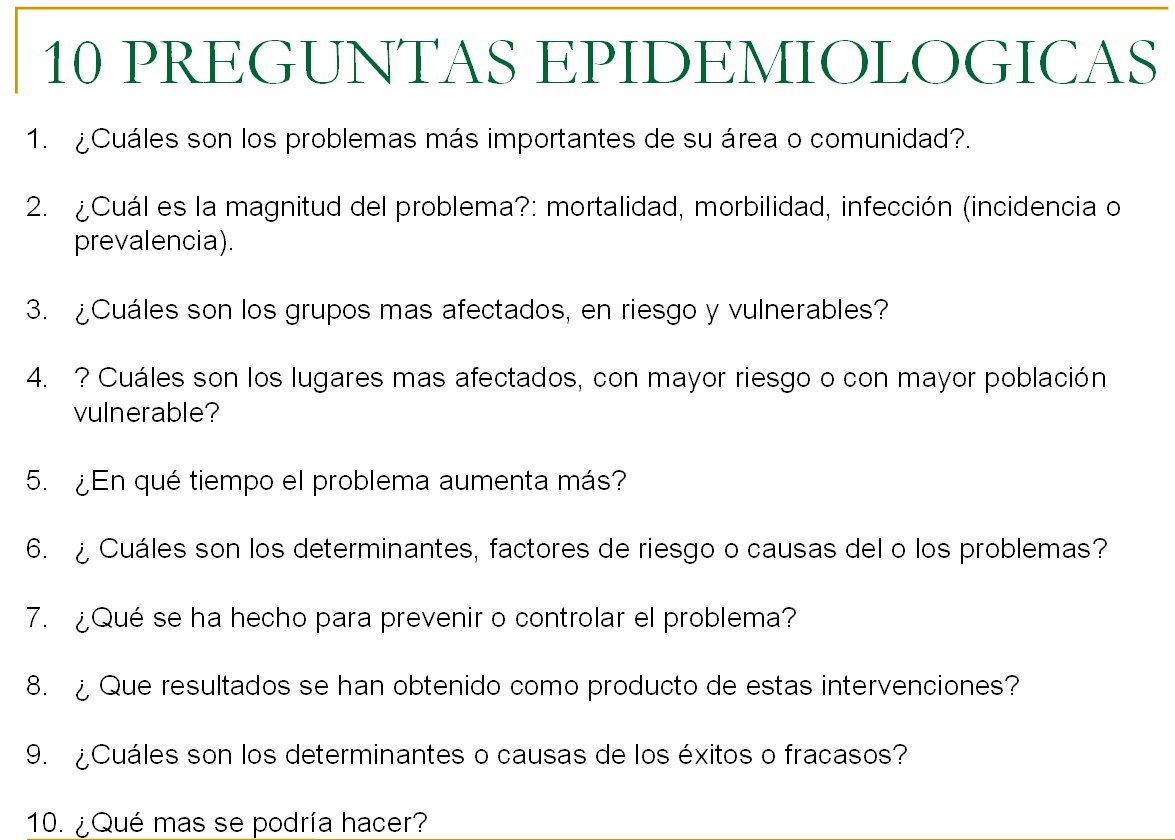
SALAS SITUAIONALES: 10 PREGUNTAS EPIDEMIOLÓGICAS

Estimados aolegas, aquí un slide interesante para aplciar en las salas situacionales: 10 preguntas epidemiológicas. Esto es obtenido de una presentaciòn preparada por el doctor Alberto Narvaez.

SALA SITUACIONAL PREGUNTAS QUE DEBEN HACERSE

Estimados colegas les dejo aqui algo sobre las salas situacionales, planteado por el Dr. Alberto Narvaez.
Saludos
Dr. Carlos Erazo

miércoles, 2 de febrero de 2011

Reducir el diagnóstico tardío del VIH, próximo reto de Sanidad

Estimados colegas , les dejo aquí más información.
Saludos
Dr. Carlos Erazo

"En 2009, se notificaron 2.264 nuevos diagnósticos de VIH en las 15 comunidades autónomas que aportaron datos, con una media de edad de 37 años y un 20,5% de casos en mujeres. Éste es uno de los principales datos del balance de los nuevos diagnósticos de VIH y sida en España, que presentó la ministra de Sanidad, Leire Pajín, con motivo del Día Mundial del Sida, que se celebró el día 1 de diciembre.
Esto supone un descenso de nuevos diagnósticos con respecto al año anterior, ya que en 2008 se notificaron más casos (2.524), pese a que hubo menos comunidades que aportaron datos (no estaban los datos de Castilla y León y Cantabria, que se incorporan este año al registro).
De todos los nuevos casos, el 50% presentó diagnóstico tardío y en el momento de ser identifi- cados como portadores del virus, los pacientes eran ya susceptibles de recibir tratamiento antirretroviral. Esta cifra ha descendido desde 2004, cuando los diagnósticos tardíos fueron un 56%.
En este sentido, la ministra recordó la importancia de “no bajar la guardia con el VIH, ya que en España se estima que entre un 25 y un 30% de las personas con VIH no sabe que está infectada, a pesar de que en nuestro país la prueba del VIH es gratuita y confidencial”.
Formas de contagio
La transmisión entre hombres que mantienen relaciones sexuales con hombres (HSH) fue la más frecuente (42,5%), seguida de la transmisión heterosexual, que supone un 34,5%, y la de usuarios de drogas inyectadas, que sumó un 8%. El 77% de los nuevos diagnósticos de VIH del año 2009 tienen su origen en la transmisión sexual. Por sexos, la transmisión entre homosexuales supone el 53% de los nuevos diagnósticos en 2009, mientras que la transmisión heterosexual en hombres suma el 23%. Entre las mujeres, la transmisión heterosexual supone la gran mayoría, con un 79% de los nuevos diagnósticos.
Respecto a 2004, se observa un descenso progresivo de infecciones en el grupo de usuarios de drogas inyectadas, mientras que aumentan los casos de transmisión entre hombres que mantienen relaciones sexuales con hombres. El número de transmisiones entre heterosexuales se encuentra bastante estable.
Por lo que respecta a los casos que han progresado hasta sida, se estima que en 2009 se diagnosticaron en España 1.275 casos de sida, lo que representa un descenso. En este sentido, desde el ministerio recuerdan que para mantener la tendencia decreciente, además de reforzar las medidas de prevención, es necesario potenciar las intervenciones destinadas a promover la prueba del VIH, así como el consejo y el diagnóstico precoz de la infección en personas que hayan tenido prácticas de riesgo.
Potenciar el diagnóstico precoz
En la misma sesión, la ministra también presentó la campaña del Día Mundial del Sida, cuyo lema este año es “Quiérete. Hazte la prueba. Usa preservativo” y tiene como objetivo sensibilizar a la población sobre la importancia de prevenir la transmisión sexual del VIH utilizando preservativo y la necesidad de realizarse la prueba si se han mantenido prácticas de riesgo.
La difusión de la campaña también tendrá su versión online con acciones en diarios digitales, buscadores, webs afines y redes sociales como Facebook. Asimismo, las informaciones de la campaña estarán disponibles en la página oficial del Ministerio en Facebook, así como en el canal oficial del Ministerio en Youtube y en su propia web (www.mspsi.es).
El acto sirvió para presentar también la revista ZUM, una publicación en formato magazine editada por la Secretaría del Plan Nacional sobre el Sida, que reflejará la situación, los avances, las tendencias y los retos que se plantean en torno a la situación epidemiológica, investigación, prevención, asistencia sanitaria y ámbito social de la epidemia.
Dentro de los actos de celebración del Día Mundial del Sida, el Ministerio de Sanidad, al igual que las comunidades autónomas, se sumaron a la iniciativa de ONUSIDA Light for Rights para recordar la importancia de respetar los derechos de las personas que viven con el VIH/sida en España."