
lunes, 7 de febrero de 2011

Análisis del ASAP 2009 Ecuador en los últimos 15 años
En los últimos 15 años , se han encontrado estudios que han trabajado con las siguientes poblaciones y que según el análisi de calidad de los mismos es baja.
En la Población HSH 9 estudios, TS (trabajadoras sexuales) 11 estudios , PPL 6 estudios, Jóvenes 11 estudios, P. General 8 estudios, PVVS 5 estudios, Otros 6 estudios , haciendo un total de 56 en los últimos 15 años.
Esto nos hace pensar en el desarrollo de la investigación de alta calidad metodológica en la linea de VIH-Sida e Its.
Dr. Carlos Erazo
En la Población HSH 9 estudios, TS (trabajadoras sexuales) 11 estudios , PPL 6 estudios, Jóvenes 11 estudios, P. General 8 estudios, PVVS 5 estudios, Otros 6 estudios , haciendo un total de 56 en los últimos 15 años.
Esto nos hace pensar en el desarrollo de la investigación de alta calidad metodológica en la linea de VIH-Sida e Its.
Dr. Carlos Erazo

Criterios para evaluar la calidad de los estudios del ASAP Ecuador 2009
Los 8 aspectos metodológicos evaluados fueron:
1) Se definió claramente el objetivo del estudio.
2) Se definieron criterios de inclusión y exclusión.
3) Se calculó el tamaño de la muestra y se colectó el número de individuos propuesto.
4) Se realizó técnica de muestreo de tipo probabilística para evitar el sesgo de selección.
5) Se implementaron estrategias para disminuir el error de recolección de datos.
6) Se describió la técnica de análisis de los datos.
7) Se reconocieron las limitaciones impuestas por la metodología.
8) Se expresaron los hallazgos con intervalos de confianza y/o significación estadística.

1) Se definió claramente el objetivo del estudio.
2) Se definieron criterios de inclusión y exclusión.
3) Se calculó el tamaño de la muestra y se colectó el número de individuos propuesto.
4) Se realizó técnica de muestreo de tipo probabilística para evitar el sesgo de selección.
5) Se implementaron estrategias para disminuir el error de recolección de datos.
6) Se describió la técnica de análisis de los datos.
7) Se reconocieron las limitaciones impuestas por la metodología.
8) Se expresaron los hallazgos con intervalos de confianza y/o significación estadística.


Vitamin D Insufficiency in HIV-Infected Patients
"Vitamin D insufficiency was slightly less common in HIV-infected patients than in the general U.S. population. The clinical significance of this insufficiency remains uncertain.
Vitamin D deficiency is associated with a broad range of disorders, many of which are also linked to HIV infection and its treatment. However, little is known about the prevalence or predictors of low vitamin D levels among HIV-infected adults.
To address this gap, researchers evaluated laboratory, clinical, and behavioral data from 672 HIV-infected patients who were part of a larger U.S. cohort study and were not receiving vitamin D supplementation. Vitamin D insufficiency was defined as a 25-hydroxyvitamin D level <30 ng/mL, and prevalence estimates were standardized by age, sex, and race.
Seventy percent of the HIV-infected population was estimated to have vitamin D insufficiency. By comparison, the estimated prevalence in the general U.S. population, based on NHANES data, was 79%. In a multivariate analysis, Hispanic or black race, lack of exercise, higher body-mass index, hypertension, and use of efavirenz were all independently associated with vitamin D insufficiency. A glomerular filtration rate <90 mL/minute/1.73 m2, use of ritonavir, and greater exposure to ultraviolet light were independently associated with a lower likelihood of vitamin D insufficiency.
Comment: The finding of a slightly lower prevalence of vitamin D insufficiency in the HIV-infected population than in the general population is somewhat surprising, although the prevalence in both groups is high. Given that the clinical significance of this insufficiency (especially in its mildest form) is poorly defined in virtually all populations, the observed associations with various HIV treatments do not, at this point, warrant any changes in screening or management. HIV clinicians can simply join providers from other fields in wondering what to do about measurement of or supplementation with this "vitamin du jour."
— Eileen Scully, MD, PhD, and Paul E. Sax, MD
Dr. Scully is a Fellow in the Division of Infectious Diseases at Brigham and Women's Hospital in Boston. She reports no conflicts of interest.
Published in Journal Watch HIV/AIDS Clinical Care February 7, 2011
CITATION(S):
Dao CN et al. Low vitamin D among HIV-infected adults: Prevalence of and risk factors for low vitamin D levels in a cohort of HIV-infected adults and comparison to prevalence among adults in the US general population. Clin Infect Dis 2011 Feb 1; 52:396.
Short-Term Neuropsychiatric Side Effects: Etravirine vs. Efavirenz
"Efavirenz is a cornerstone of many antiretroviral regimens because of its efficacy, once-daily dosing, and tolerability, but in some patients, it can cause troublesome neuropsychiatric problems. To determine whether etravirine might lead to fewer such problems, researchers conducted a randomized, double-blind, placebo-controlled study among HIV-infected treatment-naive patients. The study was sponsored by the maker of etravirine.
A total of 157 patients received etravirine (dosed at 400 mg once daily) or efavirenz, each together with two nucleosides; 60% received tenofovir/FTC, 26% received abacavir/3TC, and 14% received AZT/3TC. The study population was 81% men and 85% white. Median age was 36; median baseline CD4 count, 302 cells/mm3; and median baseline viral load, 4.8 log copies/mL.
During 12 weeks of treatment, 93% of the efavirenz group and 88% of the etravirine group achieved viral loads <400 copies/mL; median CD4-count increases were 121 and 146 cells/mm3, respectively. Neuropsychiatric adverse reactions occurred in 46% of efavirenz recipients versus 17% of etravirine recipients; serious neuropsychiatric reactions (grades 2–4) occurred in 17% versus 5%. The prevalence of neuropsychiatric problems peaked at week 2 (44% for efavirenz vs. 22% for etravirine), but the difference between groups remained significant at week 12 (30% vs. 12%). The most common nervous system side effect was dizziness, and the most common psychiatric effect involved sleep disorders. Overall, 10 patients discontinued etravirine, and 8 discontinued efavirenz (4 in each group because of skin rash); neuropsychiatric problems contributed to five of the efavirenz discontinuations and one of the etravirine discontinuations.
Comment: The authors state that the lower neuropsychiatric event rate observed with etravirine could lead to better long-term adherence, but the difference in discontinuation rates for the two drugs was modest. Furthermore, the study was relatively short and focused on the period of treatment when adverse effects from efavirenz are generally most troublesome. Drawing long-term conclusions from this study is therefore difficult".
Published in Journal Watch HIV/AIDS Clinical Care February 7, 2011
CITATION(S):
Nelson M et al. A comparison of neuropsychiatric adverse events during 12 weeks of treatment with etravirine and efavirenz in a treatment-naive, HIV-1-infected population. AIDS 2011 Jan 28; 25:335.
Race, Sex, and Clinical Outcomes in Early HIV Infection
Este es un interesante estudio, espero que lo disfruten.
Saludos
Dr. Carlos Erazo
"Previous studies have shown that, in established HIV infection, women have lower viral loads and higher CD4-cell counts than men, and nonwhites have lower viral loads than whites. Do these differences by race and sex influence clinical presentations and outcomes during early HIV infection?
To find out, researchers evaluated longitudinal data from 2277 individuals who were diagnosed with acute or recent HIV infection between 1997 and 2007. Women made up only 5% of the cohort, and 55% of them were nonwhite. In contrast, only 23% of the men were nonwhite. Most participants were from the western or midwestern U.S., but 45% of the nonwhite women were from southern states. No information was available on hepatitis coinfection, insurance coverage, income, education, or mental health. Mean follow-up time was approximately 4 years.
As expected, women had lower baseline viral loads and higher baseline CD4-cell counts than men. However, these differences disappeared within 2 years among individuals who had not yet initiated antiretroviral therapy (ART). The proportion of patients who started ART during the study period was similar between men and women (69% and 64%), as was the proportion who achieved virologic suppression within 6 months of ART initiation (81% and 77%). However, rates of ART initiation differed significantly by race and geographic location: Nonwhite men and women were less likely to start ART than white men, who were, in turn, less likely to start ART than white women. Patients from the South were less likely to start ART than those from other regions.
Women were more likely than men to report HIV-associated non–AIDS-related conditions (persistent generalized lymphadenopathy, diarrhea, peripheral neuropathy) and certain AIDS-defining illnesses (recurrent bacterial pneumonia). Of all the groups analyzed, nonwhite women in the South had the highest rate of HIV/AIDS-related events (81%).
Comment: The data presented in this paper open the door for further investigation into the influence of biology on the course of HIV infection. However, removing sociodemographic barriers to optimal care will likely have a much greater impact on outcomes than understanding biological determinants of progression and response to treatment."
Published in Journal Watch HIV/AIDS Clinical Care February 7, 2011
CITATION(S):
Meditz AL et al. Sex, race, and geographic region influence clinical outcomes following primary HIV-1 infection. J Infect Dis2011 Feb 15; 203:442.
MMWR RSS Feed
 MMWR RSS Feed How to Add MMWR RSS feeds MMWR RSS Feed How to Add MMWR RSS feeds Learn More About RSS | ||
|


| REPORTS |  |
| National Black HIV/AIDS Awareness Day February 7, 2011 | |
 full text full text | |
| Disparities in Diagnoses of HIV Infection Between Blacks/African Americans and Other Racial/Ethnic Populations 37 States, 2005--2008 | |
| full text | |
| Increase in Newly Diagnosed HIV Infections Among Young Black Men Who Have Sex with Men Milwaukee County, Wisconsin, 1999--2008 | |
| full text | |
| Vital Signs: Prevalence, Treatment, and Control of Hypertension United States, 1999--2002 and 2005--2008 | |
| full text | |
| Vital Signs: Prevalence, Treatment, and Control of High Levels of Low-Density Lipoprotein Cholesterol United States, 1999--2002 and 2005--2008 | |
| full text | |
| Announcement: Congenital Heart Defect Awareness Week February 7--14, 2011 | |
| full text | |
| Errata: Vol. 59, No. 46 | |
| full text | |
| Errata: Vol. 59, No. 49 | |
| full text | |
| QuickStats: Percentage of Persons with Current Asthma Who Reported Receiving an Asthma Management Plan from a Health Professional, by Race/Ethnicity and Age Group National Health Interview Survey, United States, 2008 | |
| full text | |
| Recommended Adult Immunization Schedule United States, 2011 | |
| full text | |
| Notifiable Diseases and Mortality Tables | |
| full text |
Association of ongoing drug and alcohol use with non-adherence to antiretroviral therapy and higher risk of AIDS and death: results from ACTG 362
http://www.informaworld.com/smpp/content~content=a933017317~db=all~jumptype=rss
Authors: Susan E. Cohnab; Hongyu Jiangc; J. Allen McCutchand; Susan L. Koletare; Robert L. Murphyb; Kevin R. Robertsonf; Annabelle M. de St. Mauriceg; Judith S. Currierh; Paige L. Williamsc
Abstract Drug and alcohol use have been associated with a worse prognosis in short-term and cross-sectional analyses of HIV-infected populations, but longitudinal effects on adherence to antiretroviral therapy (ART) and clinical outcomes in advanced AIDS are less well characterized. We assessed self-reported drug and alcohol use in AIDS patients, and examined their association with non-adherence and death or disease progression in a multicenter observational study. We defined non-adherence as reporting missed ART doses in the 48 hours before study visits. The association between drug use and ART non-adherence was evaluated using repeated measures generalized estimating equation (GEE) models. The association between drug and alcohol use and time to new AIDS diagnosis or death was evaluated via Cox regression models, controlling for covariates including ART adherence. Of 643 participants enrolled between 1997 and 1999 and followed through 2007, at entry 39% reported ever using cocaine, 24% amphetamines, and 10% heroin. Ongoing drug use during study follow-up was reported by 9% using cocaine, 4% amphetamines, and 1% heroin. Hard drug (cocaine, amphetamines, or heroin) users had 2.1 times higher odds (p=0.001) of ART non-adherence in GEE models and 2.5 times higher risk (p=0.04) of AIDS progression or death in Cox models. Use of hard drugs was attenuated as a risk factor for AIDS progression or death after controlling for non-adherence during follow-up (HR = 2.11, p=0.08), but was still suggestive of a possible adherence-independent mechanism of harm. This study highlights the need to continuously screen and treat patients for drug use as a part of ongoing HIV care. | |||
| Keywords: substance use; drug use; alcohol use; HIV/AIDS; outcomes; adherence; antiretroviral therapy; mortality |
Influenza A H1N1 in HIV-infected adults(*).
Martínez E, Marcos M, Hoyo-Ulloa I, Antón A, Sánchez M, Vilella A, Larrousse M, Pérez I, Moreno A, Trilla A, Pumarola T, Gatell J.
Infectious Diseases Unit, Hospital Clínic-IDIBAPS, University of Barcelona, Barcelona, Spain Microbiology Unit, Hospital Clínic-IDIBAPS, University of Barcelona, Barcelona, Spain HIV Unit, National Institute of Medical Sciences and Nutrition "Salvador Zubiran", Mexico City, Mexico Emergency Unit, Hospital Clínic-IDIBAPS, University of Barcelona, Barcelona, Spain Preventive Medicine and Epidemiology Unit, Hospital Clínic-IDIBAPS, University of Barcelona, Barcelona, Spain.
Abstract
OBJECTIVES: HIV-infected adults are considered to be at higher risk for influenza A H1N1 complications but data supporting this belief are lacking. We aimed to compare epidemiological data, clinical characteristics, and outcomes of influenza A H1N1 infection between HIV-infected and -uninfected adults.METHODS: From 26 April to 6 December 2009, each adult presenting with acute respiratory illness at the emergency department of our institution was considered for an influenza A H1N1 diagnosis by specific multiplex real-time polymerase chain reaction. For every HIV-infected adult diagnosed, three consecutive adults not known to be HIV-infected diagnosed in the same calendar week were randomly chosen as controls.
RESULTS: Among 2106 adults tested, 623 (30%) had influenza A H1N1 infection confirmed. Fifty-six (9%) were HIV-positive and were compared with 168 HIV-negative controls. Relative to HIV-negative controls, HIV-positive patients were older, more frequently male, and more frequently smokers (P≤0.02). In the HIV-positive group, prior or current AIDS-defining events were reported for 30% of patients, 9% and 30% had CD4 counts of <200 and 200-500 cells/μL, respectively, and 95% had HIV-1 RNA <50 copies/mL. Pneumonia (9%vs. 25%, respectively, in the HIV-positive and HIV-negative groups; P=0.01) and respiratory failure (9%vs. 21%, respectively; P=0.04) were less common in the HIV-positive group. Oseltamivir (95%vs. 71% in the HIV-positive and HIV-negative groups, respectively; P=0.003) was administered more often in HIV-positive patients. Three patients (all HIV-negative) died. In the HIV-positive group, CD4 cell count and plasma HIV-1 RNA did not differ before and 4-6 weeks after influenza A H1N1 diagnosis (P>0.05).
CONCLUSIONS: HIV infection did not increase the severity of influenza A H1N1 infection, and influenza A H1N1 infection did not have a major effect on HIV infection.
http://www.ncbi.nlm.nih.gov/pubmed/21255221

Swine flu and pregnant women: Advice, prevention and management
British Journal of Midwifery, Vol. 19, Iss. 2, 01 Feb 2011, pp 76 - 80
Since mid-December 2010, there has been an increase in the number of reported cases of severe H1N1A, or 'swine flu'. Maternity units across the UK have also seen a rapid rise in the number of hospital and intensive care unit admissions due to H1N1A infection among pregnant women. Hospitalization, critical illness and mortality rates in pregnant women with H1N1A infection are significantly higher than those of non-pregnant women of the same age. For this reason, key public health messages, including respiratory and hand hygiene, should be emphasized. Midwives and doctors should also promote influenza vaccine uptake among all pregnant women who have not previously been vaccinated against H1N1A. All those who care for pregnant women should also seek vaccination themselves.
Fibromyalgia Criteria and Severity Scales for Clinical and Epidemiological Studies: A Modification of the ACR Preliminary Diagnostic Criteria for Fibromyalgia
Abstract
Objective To develop a fibromyalgia (FM) survey questionnaire for epidemiologic and clinical studies using a modification of the 2010 American College of Rheumatology Preliminary Diagnostic Criteria for Fibromyalgia (ACR 2010). We also created a new FM symptom scale to further characterize FM severity.
Methods The ACR 2010 consists of 2 scales, the Widespread Pain Index (WPI) and the Symptom Severity (SS) scale. We modified these ACR 2010 criteria by eliminating the physician’s estimate of the extent of somatic symptoms and substituting the sum of 3 specific self-reported symptoms. We also created a 0–31 FM Symptom scale (FS) by adding the WPI to the modified SS scale. We administered the questionnaire to 729 patients previously diagnosed with FM, 845 with osteoarthritis (OA) or with other noninflammatory rheumatic conditions, 439 with systemic lupus erythematosus (SLE), and 5210 with rheumatoid arthritis (RA).
Results The modified ACR 2010 criteria were satisfied by 60% with a prior diagnosis of FM, 21.1% with RA, 16.8% with OA, and 36.7% with SLE. The criteria properly identified diagnostic groups based on FM severity variables. An FS score ≥ 13 best separated criteria+ and criteria– patients, classifying 93.0% correctly, with a sensitivity of 96.6% and a specificity of 91.8% in the study population.
Conclusion A modification to the ACR 2010 criteria will allow their use in epidemiologic and clinical studies without the requirement for an examiner. The criteria are simple to use and administer, but they are not to be used for self-diagnosis. The FS may have wide utility beyond the bounds of FM, including substitution for widespread pain in epidemiological studies.
Link: http://jrheum.org/content/early/2011/01/27/jrheum.100594.abstract
viernes, 4 de febrero de 2011
SALAS SITUAIONALES: 10 PREGUNTAS EPIDEMIOLÓGICAS
Estimados aolegas, aquí un slide interesante para aplciar en las salas situacionales: 10 preguntas epidemiológicas. Esto es obtenido de una presentaciòn preparada por el doctor Alberto Narvaez.

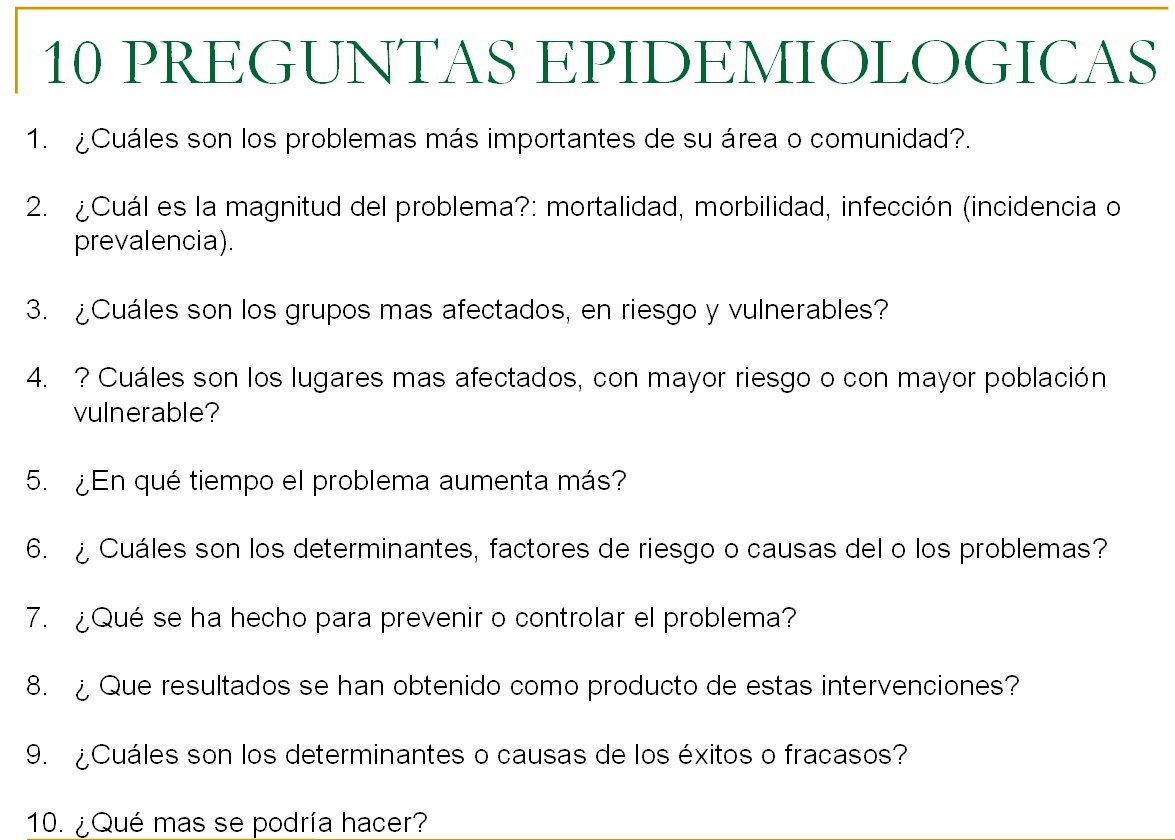
SALA SITUACIONAL PREGUNTAS QUE DEBEN HACERSE
Estimados colegas les dejo aqui algo sobre las salas situacionales, planteado por el Dr. Alberto Narvaez.
Saludos
 Dr. Carlos Erazo
Saludos

miércoles, 2 de febrero de 2011
Reducir el diagnóstico tardío del VIH, próximo reto de Sanidad
Estimados colegas , les dejo aquí más información.
Saludos
Dr. Carlos Erazo
"En 2009, se notificaron 2.264 nuevos diagnósticos de VIH en las 15 comunidades autónomas que aportaron datos, con una media de edad de 37 años y un 20,5% de casos en mujeres. Éste es uno de los principales datos del balance de los nuevos diagnósticos de VIH y sida en España, que presentó la ministra de Sanidad, Leire Pajín, con motivo del Día Mundial del Sida, que se celebró el día 1 de diciembre.
Esto supone un descenso de nuevos diagnósticos con respecto al año anterior, ya que en 2008 se notificaron más casos (2.524), pese a que hubo menos comunidades que aportaron datos (no estaban los datos de Castilla y León y Cantabria, que se incorporan este año al registro).
De todos los nuevos casos, el 50% presentó diagnóstico tardío y en el momento de ser identifi- cados como portadores del virus, los pacientes eran ya susceptibles de recibir tratamiento antirretroviral. Esta cifra ha descendido desde 2004, cuando los diagnósticos tardíos fueron un 56%.
En este sentido, la ministra recordó la importancia de “no bajar la guardia con el VIH, ya que en España se estima que entre un 25 y un 30% de las personas con VIH no sabe que está infectada, a pesar de que en nuestro país la prueba del VIH es gratuita y confidencial”.
Formas de contagio
La transmisión entre hombres que mantienen relaciones sexuales con hombres (HSH) fue la más frecuente (42,5%), seguida de la transmisión heterosexual, que supone un 34,5%, y la de usuarios de drogas inyectadas, que sumó un 8%. El 77% de los nuevos diagnósticos de VIH del año 2009 tienen su origen en la transmisión sexual. Por sexos, la transmisión entre homosexuales supone el 53% de los nuevos diagnósticos en 2009, mientras que la transmisión heterosexual en hombres suma el 23%. Entre las mujeres, la transmisión heterosexual supone la gran mayoría, con un 79% de los nuevos diagnósticos.
Respecto a 2004, se observa un descenso progresivo de infecciones en el grupo de usuarios de drogas inyectadas, mientras que aumentan los casos de transmisión entre hombres que mantienen relaciones sexuales con hombres. El número de transmisiones entre heterosexuales se encuentra bastante estable.
Por lo que respecta a los casos que han progresado hasta sida, se estima que en 2009 se diagnosticaron en España 1.275 casos de sida, lo que representa un descenso. En este sentido, desde el ministerio recuerdan que para mantener la tendencia decreciente, además de reforzar las medidas de prevención, es necesario potenciar las intervenciones destinadas a promover la prueba del VIH, así como el consejo y el diagnóstico precoz de la infección en personas que hayan tenido prácticas de riesgo.
Potenciar el diagnóstico precoz
En la misma sesión, la ministra también presentó la campaña del Día Mundial del Sida, cuyo lema este año es “Quiérete. Hazte la prueba. Usa preservativo” y tiene como objetivo sensibilizar a la población sobre la importancia de prevenir la transmisión sexual del VIH utilizando preservativo y la necesidad de realizarse la prueba si se han mantenido prácticas de riesgo.
La difusión de la campaña también tendrá su versión online con acciones en diarios digitales, buscadores, webs afines y redes sociales como Facebook. Asimismo, las informaciones de la campaña estarán disponibles en la página oficial del Ministerio en Facebook, así como en el canal oficial del Ministerio en Youtube y en su propia web (www.mspsi.es).
El acto sirvió para presentar también la revista ZUM, una publicación en formato magazine editada por la Secretaría del Plan Nacional sobre el Sida, que reflejará la situación, los avances, las tendencias y los retos que se plantean en torno a la situación epidemiológica, investigación, prevención, asistencia sanitaria y ámbito social de la epidemia.
Dentro de los actos de celebración del Día Mundial del Sida, el Ministerio de Sanidad, al igual que las comunidades autónomas, se sumaron a la iniciativa de ONUSIDA Light for Rights para recordar la importancia de respetar los derechos de las personas que viven con el VIH/sida en España."
martes, 1 de febrero de 2011
Tratamiento antirretroviral para reducir el riesgo de transmisión vertical de la infección por VIH
Estimados colegas , aquí otra información sobre el tratamiento para reducir la transmisión materno infantil .
Saludos
Dr. Carlos Erazo
Revisión Cochrane de Volmink J, Siegfried NL, Merwe L, Brocklehurst P
Este documento debería citarse como: Volmink J, Siegfried NL, Merwe L, Brocklehurst P. Tratamiento antiretroviral para reducir el riesgo de transmisión vertical de la infección por VIH. Base de Datos Cochrane de Revisiones Sistemáticas 2007, Número 4, artículo n.º: CD003510. DOI: 10.1002/14651858.CD003510.pub2.LINK: http://apps.who.int/rhl/hiv_aids/cd003510/es/
RESUMEN
INFORMACION DEFINITIVA DE LA SITUACIÓN DEL GUAYAS EN VIH -SIDA EN EL 2010
Estimados colegas, esta es la información enviada por el Epidemiologo encargado de la provincia del Guayas.
Espero que esta información sea útil.
Saludos
Dr, Carlos Erazo
Esta informacion es la definitiva del 2010.
Resumen:
VIH 2123
SIDA 550
Niños 79 : VIH 29 - SIDA 50
Embarazadas 321
Dr. Josè Muñoz Garcia
Rapid intrapartum or postpartum HIV testing at a midwife obstetric unit and a district hospital in South Africa
Estimados colegas , dejo este resumen sobre un trabajo realizado en Africad el Sur con las embarazadas y el tamizaje por las parteras.
Espero que sea útil
Saludos
Dr. Carlos Erazo
"Abstract
Objective
To compare the prepartum and postpartum feasibility and acceptance of voluntary counseling and rapid testing (VCT) among women with unknown HIV status in South Africa.
Methods
Eligible women were randomized according to the calendar week of presentation to receive VCT either while in labor or after delivery.
Results
Of 7238 women approached, 542 (7.5%) were eligible, 343 (63%) were enrolled, and 45 (13%) were found to be HIV infected. The proportions of eligible women who accepted VCT were 66.8% (161 of 241) in the intrapartum arm and 60.5% (182 of 301) in the postpartum arm, and the difference of 6.3% (95% CI, − 1.8% to 14.5%) was not significant. The median times (44 and 45minutes) required to conduct VCT were also similar in the 2 arms. In the intrapartum arm, all women in true labor received their test results before delivery and all those found to be HIV positive accepted prophylaxis with nevirapine before delivery.
1.8% to 14.5%) was not significant. The median times (44 and 45minutes) required to conduct VCT were also similar in the 2 arms. In the intrapartum arm, all women in true labor received their test results before delivery and all those found to be HIV positive accepted prophylaxis with nevirapine before delivery.Conclusions
Rapid testing in labor wards for women with an unknown HIV status is feasible and well accepted, and allows for a more timely antiretroviral prophylaxis than postpartum testing."
Link: http://www.ijgo.org/article/PIIS0020729210005783/abstract?rss=yes
domingo, 30 de enero de 2011
Perspectivas del desarrollo humano en Ecuador
Ustedes pueden acceder a esta tesis con información importante sobre el Desarrollo Humano del Ecuador, tiene definciciones y formulas asi como información útil para realizar investigación en el Ecuador.
Saludos
Dr. Carlos Erazo
http://repositorio.iaen.edu.ec/bitstream/123456789/284/1/IAEN-024-2004.pdf
Saludos
Dr. Carlos Erazo
http://repositorio.iaen.edu.ec/bitstream/123456789/284/1/IAEN-024-2004.pdf
El VIH y el sida en las Américas: una epidemia con muchas caras
Estimados colegas, este artículo es muy interesante al mencionar las diferentes caras que presenta la epidemia, epsero que sea de utilidad para ustedes.
Les dejo el link para poder acceder al pdf de forma gratuita.
Saludos
Dr. Carlos Erazo
Rev Panam Salud Publica/Pan Am J Public Health 8(6), 2000
"A medida que se sabe más sobre la epidemia de infección por el virus de la inmunodeficiencia humana (VIH) y los comportamientos que la extienden, más evidente se hace la diversidad de la pandemia, sobre todo en el continente americano, y en especial en América Latina y el Caribe (ALC). En este informe se trata de reflejar esa diversidad, para lo cual se revisan los conocimientos sobre la epidemia en diferentes países y subregiones y se describe la información sobre las conductas de riesgo tanto en la población general como en grupos particulares. Además, se señalan las lagunas de los conocimientos y de los sistemas de información actuales, y
se hacen propuestas para mejorar la recolección y análisis de los datos. Por último, se comentan algunos de los principales retos que plantea el sida en la Región, como la demanda creciente de tratamiento y la necesidad de mantener los esfuerzos preventivos. El informe está pensado fundamentalmente como una revisión epidemiológica y no trata de describir las medidas adoptadas por las comunidades y los países para combatir la epidemia, muchas de las cuales se han descrito en otros documentos."
DISCURSOS SOBRE EL VIHjSIDA: UN ESTUDIO EN PAREJAS HETEROSEXUALES VIVIENDO CON VIHjSIDA EN ECUADOR
Colegas , otro estudio sobre VIH/Sida en Ecuador.
Saludos
Dr. Carlos Erazo
CONCLUSIONES
"Al cuestionar la definición social de las personas a partir de su cuerpo, este estudio pretendió -desde el feminismo- problematizar la construcción del sujeto al mirar las relaciones que se establecen entre las personas, a partir de la corporeidad, la sexualidad, las representaciones de género y el cuerpo con VIH/SIDA. La sexualidad ha estado estructurada socialmente, y definida y regulada por el grupo social con mayor poder político y económico, (c.f. Kitzinger 1979, Kelly 1997, Foucault). Por ello, bajo el término sexo se han caracterizado y unificado no sólo las funciones biológicas y rasgos anatómicos, sino también la actividad sexual. Dentro de este marco, el análisis realizado brinda algunas luces sobre la relación entre sexualidad, construcciones sociales y representaciones de género y VIH/SIDA, en donde las entradas teóricas y las herramientas metodológicas han mostrado diferentes posibilidades dentro de las dinámicas de poder entre los sexos. La construcción de la sexualidad, que descansa sobre una matriz heterosexual y que está atravezada por una estructura patriarcal, disminuye -tanto en mujeres como en hombres- la posibilidad de negociación de una
sexualidad segura, representada a través del uso del condón."
Link para la tesis completa :
INFECCIONES OPORTUNISTAS NEUROLÓGICAS EN PACIENTES CON SIDA EN ECUADOR
Estimados colegas aqu'í otro trabajo sobre VIH-Sida en el Ecuador.
Espero que sea útil para ustedes.
Saludos
Dr. Carlos Erazo
Autores
Dr. Fabricio Arteaga Mendieta *
*Médico Internista Hospital Clínica Kennedy Alborada, GuayaquilMed. Vivian Arreaga Bohórquez **
** Médico Área de Emergencia Hospital de Infectología, GuayaquilDr. Freddy Coronel López ***
***Médico R2 del Pabellón Valdez Unidad de Cuidados Intensivos Hospital Luís VernazaDr. Gensy Miguel Cardozo Barroso****
****Sub-Director Técnico Del Centro Médico “Santa Isabel”, Guayaquil
RESUMEN
"Una variedad de infecciones oportunistas ocurre en el SNC. La susceptibilidad de los individuos con VIH en las infecciones oportunistas está relacionada con el grado de inmunosupresión y están correlacionados al contaje de sangre periférica de linfocitos CD4. La discusión de los hallazgos clínicos, evolución y manejo de las infecciones varía de acuerdo a cada organismo patógeno.
La toxoplasmosis es la típica causa de lesiones múltiples en el SNC y se presentan con encefalopatía y hallazgos neurológicos focales.
El Criptococo es la causa más frecuente de infección fúngica en el SNC en pacientes con SIDA. Los pacientes se presentan con cefalea, fiebre y podrían tener alteraciones en el estado mental. El diagnóstico esta basado en los resultados de punción lumbar y en la determinación de los antígenos en el látex.
El Histoplasma c. esta infección ocurre en algunos pacientes con SIDA quienes viven en áreas endémicas. El diagnóstico esta basado en el cultivo.
La Aspergilosis se incrementa en algunos pacientes infectados con VIH especialmente aquellos quienes presentan neutropenia y estadíos avanzados de la enfermedad. El diagnóstico requiere una biopsia del SNC."
Suscribirse a:
Entradas (Atom)